Early Clues to Parkinson’s in the Gut Microbiome
Parkinson’s disease (PD) is traditionally known for its motor symptoms: tremor, stiffness, and slowed movement. But long before the physical signs emerge, changes inside the body may be quietly unfolding. One of the most intriguing leads centers on the gut microbiome, the bustling ecosystem of bacteria living in our intestines, and how its imbalance, or dysbiosis, might reflect early Parkinson’s progression.
A cross-sectional study examined gut microbiome alterations across the spectrum of early PD, REM sleep behavior disorder (RBD), first-degree relatives of RBD patients (RBD-FDR), and healthy controls, providing insights into the gut-brain staging model of PD. This study demonstrated that gut microbiota compositions were significantly altered in early PD and RBD compared with controls and RBD-FDR. Notably, depletion of butyrate-producing bacteria and enrichment of pro-inflammatory Collinsella emerged in both RBD and RBD-FDR groups, even after controlling for potential confounders including antidepressants, osmotic laxatives, and bowel movement frequency. Using random forest modeling, the investigators identified 12 microbial markers that effectively distinguished RBD from controls. This finding has potential diagnostic implications for identifying individuals at high risk for PD progression.
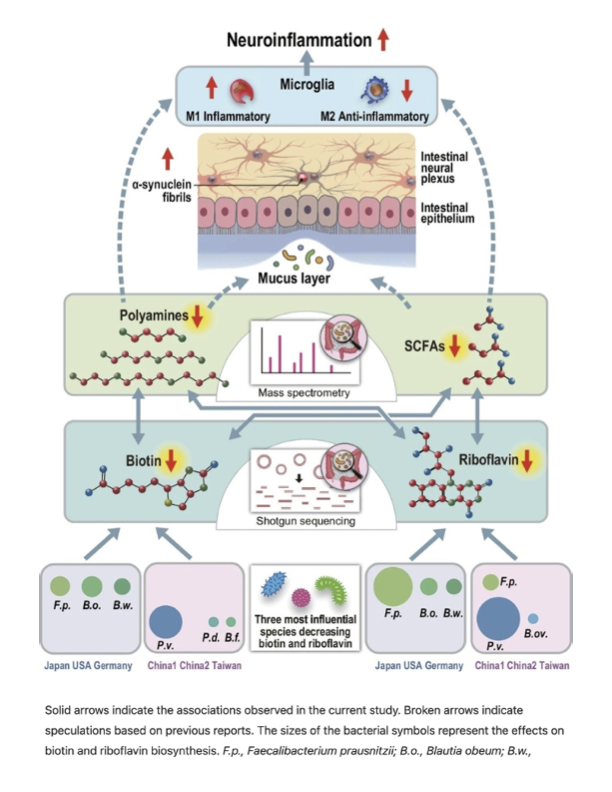
The key conclusion is that PD-like gut dysbiosis occurs at prodromal stages when RBD develops and begins to emerge even in younger RBD-FDR subjects. This supports the hypothesis that microbiome alterations may precede clinical PD manifestations and could represent early pathophysiological changes in the disease process. Why does this matter? There’s a growing appreciation that Parkinson’s might begin outside the brain. According to the gut–brain axis theory, pathological processes, such as misfolded proteins like alpha-synuclein, could originate in the gastrointestinal system, spread via the vagus nerve, and years later manifest as classical PD symptoms.
These findings open up meaningful possibilities:
🧠 Early detection: Gut microbiome profiles may serve as early biomarkers for Parkinson’s risk.
🧬 Understanding progression: Dysbiosis could help elucidate why and how PD begins in the nervous system.
🍽️ Future therapies: If causative links are confirmed, microbiome-targeted interventions (e.g., diet, probiotics, precision microbiota modulation) may play a role in prevention or early treatment.
This research marks an important step in moving Parkinson’s research beyond the brain to include the gut microbiome as a window into neurodegenerative disease progression. The fact that dysbiosis appears in RBD and even in first-degree relatives highlights the potential of gut microbes as both a diagnostic tool and a target for early intervention; long before classic PD symptoms take hold.