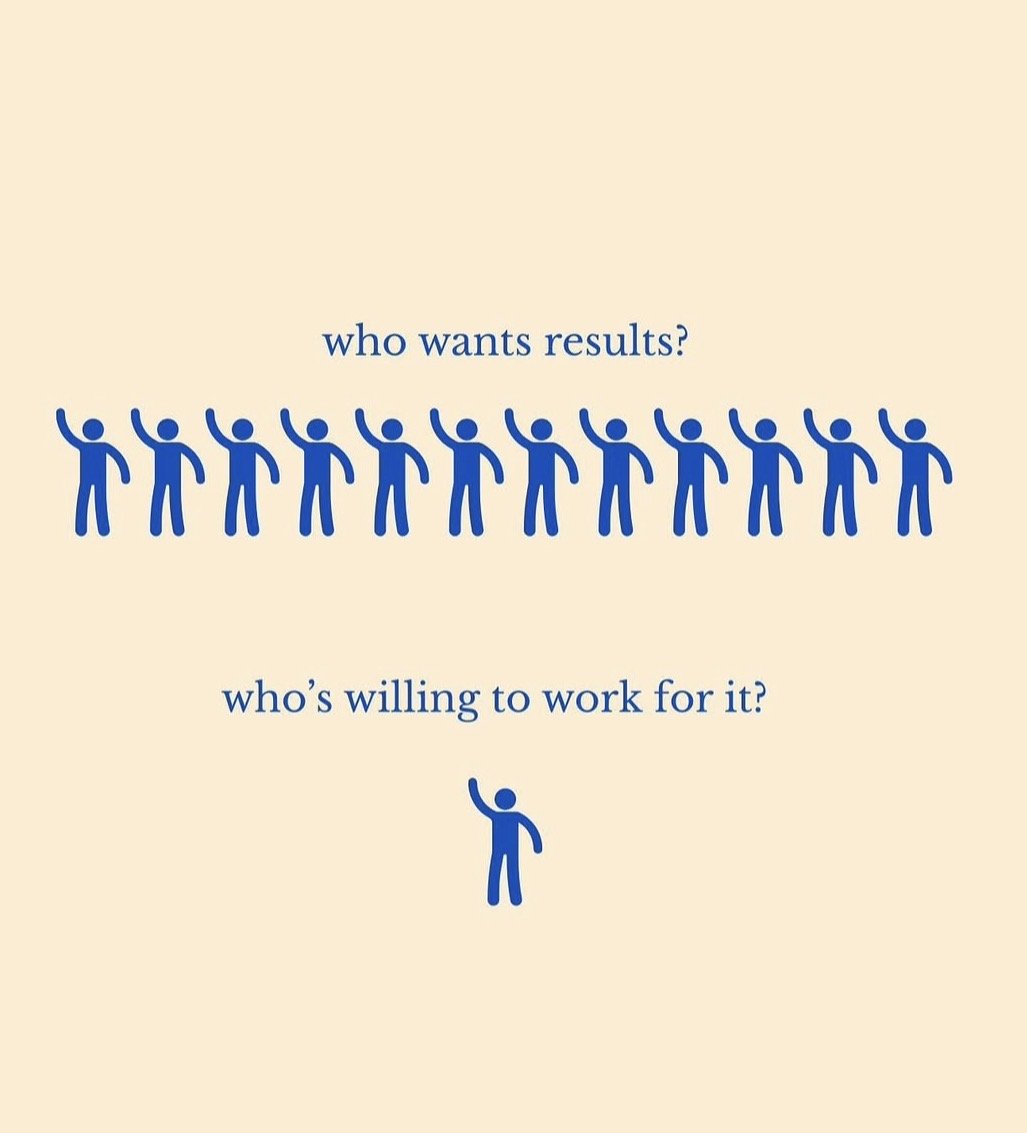
Every one wants to heal. Almost no one wants to change how they live.
5 Truths About Functional Health
It Takes Time
Effort Matters
You Must Make Sacrifices
Boring Works
Results Will Vary Depending on Personal Variables
There is a hard truth that most people eventually run into on their health journey: Everyone wants the outcome. Very few people want the process.
People want energy, weight loss, clear skin, stable moods, lower inflammation, deeper sleep, better labs, and freedom from chronic symptoms. But when healing requires changing routines, habits, relationships with food, sleep schedules, stress patterns, alcohol intake, convenience culture, or emotional coping mechanisms, resistance appears almost immediately.
Modern culture has conditioned people to believe health can be purchased, outsourced, hacked (this one makes me laugh), or downloaded. We are surrounded by promises of “quick fixes,” miracle supplements, 30-day transformations, and biohacking shortcuts. Functional health does not work that way. I am sure this opinion education piece will not be popular amongst grifter health practitioners and biohackers, who monetize wellness by blending pseudoscience with legitimate health advice, targeting vulnerable individuals with expensive, unproven therapies. Real healing is usually slow, repetitive, inconvenient, and deeply personal.
It often asks people to confront the very lifestyles that contributed to “their dysfunction” in the first place:
Chronic stress
Sedentary behavior
Poor sleep
Emotional burnout
Ultra-processed food
Overconsumption
Under-recovery
Constant stimulation
Lack of boundaries
Lack of consistency
The uncomfortable reality is that the body is not confused. It is responding to inputs. Functional health is not about suppressing symptoms long enough to feel temporarily better. It is about identifying why the body is struggling and creating an environment where healing becomes possible. That process requires participation from the patient, not just protocols from the practitioner: that is where most people struggle. Healing is rarely about doing one dramatic thing. It is about doing hundreds of small things repeatedly and consistently, often without immediate reward.
The people who experience the greatest transformations are usually not the people searching for the most advanced interventions. They are the people willing to become radically consistent with foundational behaviors long enough for physiology to change. That leads to five truths about functional health that almost nobody wants to hear, but everyone eventually needs to understand. If you’ve worked with me, this article is no surprise. If you’re considering whether to work with me or not, this is a good place to start, so you are prepared for what you will be confronted with.
The 5 Truths About Functional Health
Truth #1: It Takes Time
When Jon (to comply with HIPAA confidentiality, all names have been changed) is a 73 year old male client who first came into my office, wanting what almost everyone wants: to feel better quickly. He was tired all the time. His blood sugar was unstable. He had gained weight slowly over the years. His sleep was inconsistent, his energy crashed in the afternoon, and exercise felt harder than it used to. Like many people his age, he had accepted most of it as “just getting older.”
He also quietly mentioned something else that many men never talk about openly: he had been struggling with erectile dysfunction for years. He told me he and his wife had not been sexually intimate since she went through menopause over 25 years ago. In his mind, this was simply what aging looked like. That mindset is incredibly common. People normalize dysfunction when it develops gradually enough.
While aging absolutely changes physiology, many of the symptoms people blame entirely on age are also strongly connected to metabolic health, cardiovascular function, hormone status, inflammation, endothelial health, sleep quality, body composition, movement patterns, and nervous system regulation. In other words, the body reflects cumulative inputs. Jon’s body had spent decades adapting to chronic stressors: sedentary habits, poor recovery, muscle loss (he presented as sarcopenic and DEXA imaging later revealed early onset osteopenia), blood sugar dysregulation, chronic inflammation, sleep disruption, emotional stress, and inconsistent movement.
None of those things developed in six weeks. So why would anyone expect them to reverse in six weeks?That is one of the biggest misconceptions in functional health. People often expect the body to heal faster than it was damaged. Sure a couple of sessions in the hyperbaric oxygen chamber may help him feel better, but will it change his habits or the diseases caused by them? Physiology does not work on the timeline of motivation. It works on the timeline of biology. Muscle takes time to build. Insulin sensitivity takes time to improve. The gut lining takes time to repair. The nervous system takes time to regulate. Mitochondria take time to become more efficient. Sleep architecture takes time to normalize. Chronic inflammation takes time to quiet down. The body changes slowly because real adaptation is happening at the cellular level.
In Jon’s case, we did not chase perfection. We focused on consistency: more dietary protein, daily walking, resistance training, better sleep habits, fewer ultra-processed foods, stable meal timing, hydration, fiber intake, and gradual behavior change. Nothing about it was flashy and that is exactly why it worked. After 2-years his energy improved. His strength improved. His blood sugar became more stable. His body composition slowly changed. He began feeling more capable, more resilient, and more optimistic. Perhaps most importantly, he stopped viewing decline as inevitable and that shift matters. At the end of our time together he shared that he felt better in his mid-seventies than he did in his mid-sixties. His test results proved that his feeling was not just subjective either.
I’ve found that once people believe deterioration is unavoidable, they stop participating in their own recovery. They stop moving, trying, and expecting improvement. They unconsciously adapt their identity around limitation. Functional health challenges that narrative. Not by pretending aging does not exist, but by asking a different question: How much of what we call “aging” is actually accumulated dysfunction? The answer is often uncomfortable, because it means people usually have more influence over their health trajectory than they realize. It also means responsibility cannot be outsourced. This is what many people struggle to accept: you cannot undo 20 years of physiological dysfunction in 20 days.
Functional medicine is often less about “discovering the magic answer” and more about creating enough consistent positive inputs for long enough that the body finally has an opportunity to adapt in a healthier direction. The people who succeed are usually not the people who move the fastest. They are the people who stay engaged long enough for healing to compound.
Truth #2: Effort Matters
Anna, a 30-year-old woman, came into my office with one primary goal: she wanted to get pregnant. Like many women struggling with infertility, she had already spent years searching for answers. She had undergone extensive testing, specialist consultations, fertility interventions, hormone treatments, and emotional exhaustion. She had spent thousands of dollars trying to force an outcome that her physiology was not yet prepared to support. Further evaluation revealed something deeper driving her problem; polyendocrine metabolic ovarian syndrome (PMOS) formerly named polycystic ovarian syndrome (PCOS). Not just as a diagnosis on paper, but as a metabolic condition affecting her entire system.
Her blood sugar regulation was poor. She had significant insulin resistance. Her stress levels were chronically elevated. Her sleep was inconsistent. She relied heavily on convenience foods, because her schedule and emotional exhaustion left little capacity for preparation or recovery. She had very low muscle mass relative to what we would ideally want for metabolic resilience and glucose disposal. AND like many people, she viewed these things as “separate problems”.
The body does not compartmentalize the way modern healthcare often does. The reproductive system responds to the environment it is living in. Ovulation is not just a reproductive event, it is also a metabolic event. Questions an infertile woman rarely asks herself:
Is there enough energy available?
Is blood sugar stable?
Is inflammation manageable?
Is the nervous system safe enough?
Are hormones receiving the right signals?
Is the body resilient enough to support pregnancy?
In many women with PMOS, the answer becomes increasingly complicated because insulin resistance disrupts ovarian signaling, hormone balance, ovulation patterns, and androgen regulation. This is where effort becomes uncomfortable. Most often, people want healing to happen independently from lifestyle change. In addition her OB/GYN did not support my approach. The OB/GYN suggested medication without suggesting a change to Anna’s stress patterns and a fertility procedure without suggesting that Anna change her behaviors. The fertility treatments, without changing Anna’s metabolic environment, failed.
Human biology is not transactional. You cannot continuously send the body signals of chronic stress, sleep deprivation, sedentary living, muscle loss, unstable blood sugar, and inflammatory eating patterns while simultaneously expecting optimal reproductive function. At first, Anna’s focus was almost entirely on “getting pregnant.” Her focus had to shift toward helping her become healthier overall. None of the interventions I suggested were glamorous. None of them were marketed as miracle fertility hacks. However, the interventions addressed the terrain her hormones were operating within.
Over time, Anna’s body composition improved. Her blood sugar became more stable. Her energy improved. Her cycles became more regular. Her stress resilience improved. Her metabolic health improved. Eventually, after years of failed fertility efforts, she became pregnant on her own without trying. Not because there was one magical intervention, but because her physiology finally had enough support to function differently. This is one of the hardest truths in functional health: effort matters because inputs matter. Not in a punishment-based way and not in a shame-based way, but in a biological way. The body responds to repeated signals. While genetics absolutely matter, lifestyle still profoundly shapes whether those genetic tendencies are amplified or suppressed. This is a hard truth that is grossly overlooked by patients and healthcare practitioners alike.
Truth #3: You Must Make Sacrifices
Jamie, a 55-year-old CEO of a medical supply company, came into my office after being diagnosed with autoimmune disease and mast cell activation syndrome. On paper, he was successful by almost every modern metric imaginable and no stranger to making sacrifices. He had built a thriving company and employed dozens of people. He carried enormous responsibility and prided himself on being “the person everyone could rely on”. His schedule was relentless: eighteen-hour workdays, constant travel, pressure from investors, and sleep deprivation were all normal for him. Sacrifice was his identity.
After 20-years of non-stop business burden, his body sent him some invoices that he had to finally pay. His symptoms had become impossible to dismiss: severe fatigue, brain fog, GI dysfunction in the form of IBS, histamine reactions, skin flares, joint pain, anxiety, insomnia, and nervous system hyper-vigilance. Every physician he had met with until meeting with me, chose to treat the above symptoms individually, with different specialties and medications. By the time we finally met, he had medical 8 specialists, and was taking 12 different pharmaceutical medications (2 were contraindicated).
At the same time, his personal life was collapsing. His wife had left him suddenly by his account. He shared joint custody of his three children, but they increasingly preferred staying with their mother because he was rarely home; even when it was technically his parenting time. He was physically present just enough to maintain responsibility, but not enough to maintain connection. And yet, despite all of this, he still viewed reducing work as “unrealistic”. Until…. his body shut down completely.
That is the part many people fail to understand about lifestyle medicine and functional health. The obstacle is rarely lack of information, it’s in fact attachment. People become deeply attached to the patterns that are simultaneously destroying them. Overworking becomes identity. Hyper-productivity becomes self-worth.
Busyness becomes validation. Stress becomes normalized. Self-neglect becomes framed as sacrifice, yet not the sacrifice we must make to heal.
Many people only recognize sacrifice when it involves giving something up externally like alcohol, sugar, processed foods, late nights, and sedentary habits. However, sometimes the greater sacrifice is psychological. You may have to sacrifice constant availability, the need to be needed, productivity addiction, financial excess, external validation, control, and the identity built around over-functioning. This patient had spent years sacrificing his health, marriage, sleep, nervous system, and relationships in service of professional success. When asked to sacrifice some work hours, reduce stress exposure, prioritize recovery, and create actual boundaries, it suddenly felt impossible. That contradiction is incredibly common. Sadly, this patient lost his life due to a myocardial infarction (heart attack) shortly after we began working together. At the age of 55, he left behind three young children.
In my experience, people will sacrifice their bodies for achievement, long before they sacrifice achievement for their bodies. The problem here was that chronic stress was not abstract. It changed his physiology. It altered his cortisol rhythm, immune regulation, and sleep architecture. It increased his inflammatory signaling and amplified nervous system dysregulation. No supplement stack or long list of pharmaceutical medications can fully outcompete a lifestyle built around chronic physiological overload. Chronic imbalance always extracts payment eventually. The difficult truth is this: You cannot heal in the same environment that is constantly dysregulating you. For many people, functional health is not simply asking them to change behaviors, it is asking them to reevaluate what they believe success is worth.
Truth #4: Boring Works
One of the most overlooked realities in functional health is that the things that work are often painfully unexciting. Not because they are ineffective, but because they are repetitive. I once worked with a young woman in her early twenties who was dealing with chronic pain, weakness, and significant frailty. She had spent years undernourished and chronically stressed. She came from a financially strapped home that could not prioritize nutrient dense nutrition. Her body lacked resilience, because it simply had not been consistently supported with enough nutrients and protein, or enough muscle-building stimulus.
Like many young adults, she also faced a major practical problem of not having much money. This is where social media often distorts health conversations. Online wellness culture tends to present healing as an aesthetic lifestyle built around expensive supplements, elaborate recipes, exotic ingredients, biohacking gadgets, and perfectly curated routines. For many people, sustainable healing looks much simpler and much more repetitive. Due to financial limitations, the only way she could consistently afford high-quality nutrition was to buy food in bulk and prepare many of the same meals repeatedly. So she did. Week after week, her meals looked remarkably similar: a protein source, high fiber carbohydrates, colorful fruits / veggies, and healthy fats.
She also reported that her stress levels decreased, because her life became simpler. The meals were familiar, easy to prepare, predictable, affordable, and nourishing. That gave her time and mental energy back. That matters more than many people realize. Decision fatigue is physiologically stressful. Constant complexity increases the likelihood of inconsistency. Many people fail not because they lack information, but because they create systems that are impossible to sustain under real-life stress. Boring systems are often sustainable systems.
This woman got stronger, built resilience, and became more efficient. She highlighted that some of the healthiest people I work with have limited resources and still reach their goals. This is one of the hardest lessons for people immersed in modern wellness culture to learn. The body does not care if your routine is entertaining or exciting. Your body wants what’s repeatable and sustainable. Meanwhile, many people spend years jumping between detoxes, elimination diets, supplements, fasting protocols, and optimization trends while never becoming consistent with the fundamentals. The irony is that healing often accelerates when people stop chasing constant novelty.
Truth #5: Results Will Vary Depending on Personal Variables
One of the most uncomfortable truths in functional health is that people are not starting from the same physiological baseline. Two people can follow the exact same protocol and experience completely different outcomes. Physiology reflects accumulated history and health is cumulative. The choices made in your twenties often appear in your forties. The habits repeated in your thirties often shape your fifties. A person’s physiological resilience, or dysfunction, carried into older age is rarely random. The body keeps score of both nourishment and neglect. This is important because modern culture often promotes the illusion that health can always be rapidly optimized at any stage with enough supplements, technology, money, or motivation.
I’ve found in clinical practice that there are biological realities people do not like to acknowledge. The human body is always adapting in one direction or another and our choices, positive or negative, do compound. That adaptation becomes increasingly important with age, because physiology loses some flexibility over time. Recovery capacity, hormonal resilience, tissue regeneration, and metabolic adaptability changes. This does not mean people cannot dramatically improve their health later in life. It does mean there is often a difference between improvement and full optimization; and that distinction matters as it sets appropriate expectations.
A person who spent 30 years strength training, sleeping well, managing stress, maintaining healthy body composition, and protecting metabolic health is simply operating from a different physiological foundation than someone who spent 30 years sedentary, sleep deprived, inflamed, insulin resistant, chronically stressed, and metabolically dysregulated. Both people have the ability to continue to improve, but their ceilings may not be identical. This is another hard truth and where diminishing returns become important.
It means timelines, outcomes, and expectations must remain grounded in biological reality. Functional health is not magic, it’s physiology. Optimization can never truly be built on top of a chronically dysfunctional foundation. This is where many people misunderstand the concept of “biohacking.” They attempt to optimize performance while ignoring the foundational systems that create health in the first place. The body does not bypass fundamentals simply because interventions become more advanced. A cracked foundation does not become stable because the house gets more expensive decorations. This is perhaps the most important point: Small daily decisions rarely feel significant in the moment, but compounding is subtle until it becomes visible.
When small daily decisions are repeated consistently over years:
Those choices become identity.
They become physiology.
They become trajectory.