Food as Medicine: How to Eat According to TCM Constitutions
Central to Traditional Chinese Medicine (TCM) philosophy is the concept of harmony, the delicate balance between Yin and Yang energies within the body and the harmonious integration of the Five Elements: Wood, Fire, Earth, Metal, and Water. Each element corresponds to specific organs, flavors, and seasons, shaping our dietary needs and influencing our overall well-being.
The TCM approach to nutrition is highly individualized, recognizing that each person has a unique constitution and energetic makeup. By understanding one's constitutional type, whether Wood, Fire, Earth, Metal, or Water, individuals can tailor their diet to address imbalances and promote optimal health. Understanding one's constitutional type can take time, since we all embody the Five Elements. Our Five Element constitution reflects a combination of innate and acquired factors that influence physical, emotional, and energetic tendencies.
Five Element theory is highly complex and many acupuncturists do not practice Five Element theory. This is neither right or wrong; Five Element theory is a specialty within TCM and requires both practitioner & patient participation to understand one's constitutional type.
Several key contributors are typically considered:
Prenatal/Innate Factors: Genetic and familial traits
Birth Timing and Chinese Cosmology: Ba Zi / Four Pillars of Destiny, Heavenly Stem and Earthly Branch, and seasonal influences
Environmental and Lifestyle Factors: Early environment, life experiences and habits, acquired and lifestyle modifiers, and geographic location
Emotional and Psychological Tendencies
In addition to constitutional type, TCM emphasizes the importance of aligning dietary habits with the changing seasons. Just as nature transitions through cycles of growth, abundance, harvest, and dormancy, so too does the human body experience fluctuations in energy and function throughout the year. By adapting our diet to reflect the seasonal abundance of fresh, locally available foods, we can support our body's natural rhythms and enhance our overall well-being.
The Five Elements and Constitutions
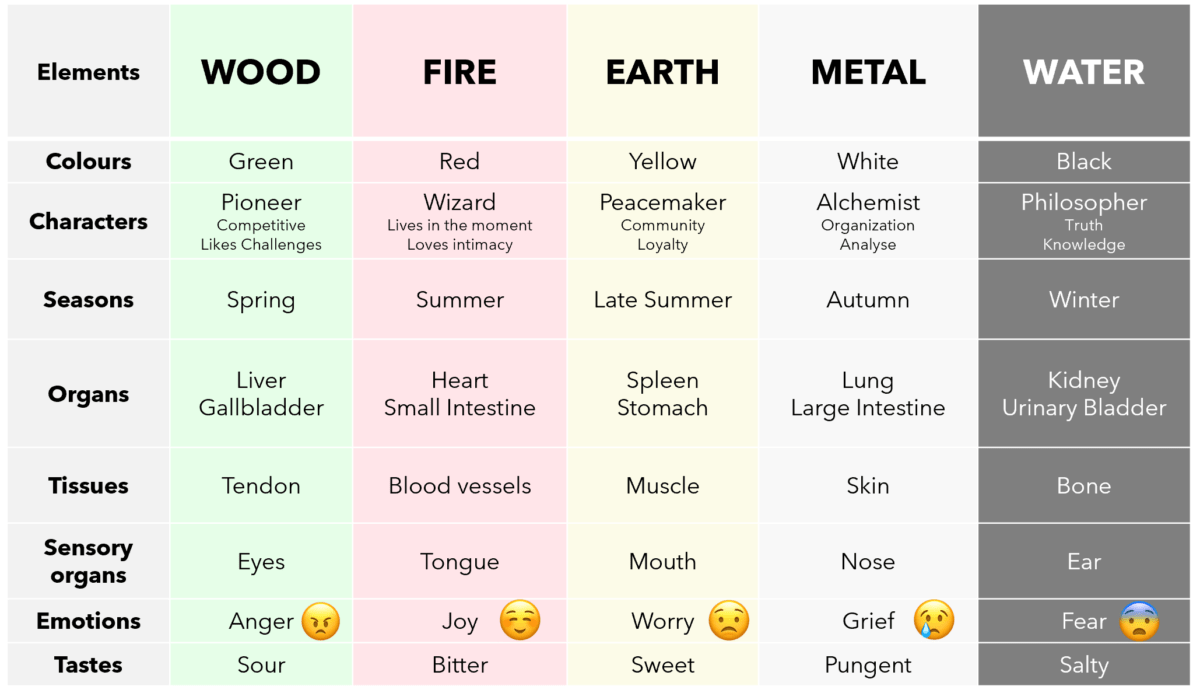
TCM offers a rich tapestry of wisdom and insight into the natural world and its direct correlation to human health. Each element is associated with specific organs, emotions, seasons, colors, and sounds, creating a comprehensive framework for diagnosing and treating illness.
Wood Constitution: Individuals with a Wood constitution are often described as assertive, driven, and capable of powerful growth and flexibility, much like the trees and plants that represent this element. They possess strong leadership qualities and a pioneering spirit but can become prone to stress and anger when out of balance. The liver and gallbladder are the organs associated with Wood, playing a crucial role in the smooth flow of Qi and blood throughout the body. An imbalance in the Wood element often presents with physical symptoms such as tension headaches, muscular stiffness, high blood pressure, digestive issues, particularly related to the Liver and Gallbladder, and emotional disturbances like anger, frustration, and irritability. These symptoms reflect an underlying struggle with life's direction and the flow of Qi, or life force.
Nutritionally, balancing the Wood constitution involves consuming foods that support liver health and ensure the smooth flow of Qi, such as leafy greens, beets, and sour flavors that stimulate liver function.
Foods that allow wood constitution types to thrive include:
Foods: Leafy greens (spinach, kale), sprouts, broccoli, celery, green peppers, green apples, citrus fruits, dandelion greens, basil, mint.
Herbs and spices: Turmeric, ginger, peppermint, fennel, rosemary, cilantro.
Proteins: Chicken, turkey, fish (especially those high in omega-3 fatty acids like salmon), tofu, tempeh.
Alternatively, when wood is imbalanced which. Manifests as a Liver Qi stagnation, it is best to adjust slightly and tailor the diet to address the imbalances:
Foods: Bitter greens (arugula, dandelion greens), lemon, lime, grapefruit, green tea, celery, turmeric, ginger, artichokes, beets.
Herbs and Spices: Mint, chamomile, rosemary, basil, fennel, coriander, parsley.
Proteins: Lean poultry (chicken, turkey), fish (especially those high in omega-3 fatty acids like salmon), tofu, tempeh.
Fire Constitution: Fire individuals are characterized by their passion, charisma, and joy. They thrive on connection and excitement, embodying the warmth and brightness of their element. However, they may struggle with anxiety, restlessness, and insomnia when their Fire burns too intensely. The heart and small intestine are the key organs for Fire, with an emphasis on maintaining heart health and emotional well-being. Emotionally, individuals may experience anxiety, restlessness, or a lack of joy, often displaying inappropriate laughter or sudden emotional outbursts.
Dietary recommendations focus on calming the mind and cooling the body, incorporating foods like bitter greens, berries, and seeds that support heart health and mitigate heat.
Foods that allow fire constitution types to thrive include:
Foods: Berries (strawberries, raspberries), cherries, peaches, tomatoes, avocados, peppers (especially red), tropical fruits (pineapple, mango), spinach, garlic, onions.
Herbs and spices: Cayenne pepper, chili peppers, cinnamon, ginger, garlic, basil.
Proteins: Lean beef, lamb, chicken, turkey, eggs, yogurt.
When fire is imbalanced and presents excess heat, here are some examples of foods that can help cool the body:
Foods: Cooling fruits (watermelon, cucumber, melons), leafy greens (lettuce, spinach), coconut water, cucumber, mung beans, tofu, white mushrooms.
Herbs and Spices: Peppermint, cilantro, cilantro, chrysanthemum, dandelion.
Proteins: White meat poultry (chicken, turkey), fish (white-fleshed varieties), tofu, tempeh.
Earth Constitution: Those with an Earth constitution are nurturing, empathetic, and grounded. They are the peacemakers, often putting others' needs before their own, which can lead to worry and overthinking. The spleen and stomach are the Earth organs, central to digestion and nutrient absorption. When the Earth element is imbalanced, digestive issues, fatigue, and muscle weakness may arise. This imbalance also affects the emotional realm, manifesting as excessive worry, pensiveness, and a tendency to over-sympathize, leading to emotional drainage.
A balanced diet for Earth types includes easily digestible foods, mildly sweet flavors, and grounding root vegetables that support spleen health and digestive harmony. Whether balanced or imbalanced, earth constitution types should focus on:
Foods: Root vegetables (carrots, beets), sweet potatoes, squash, pumpkin, oats, brown rice, barley, legumes (beans, lentils), figs, dates, apricots, almonds, walnuts.
Herbs and Spices: Cumin, ginger, cardamom, cinnamon, nutmeg, turmeric.
Proteins: Legumes (beans, lentils), nuts (especially almonds and walnuts), seeds (sunflower seeds, pumpkin seeds), tofu, tempeh.
Metal Constitution: Metal types are organized, disciplined, and principled, valuing structure and clarity. They can, however, lean towards rigidity and melancholy if their Metal aspect becomes unbalanced. The lungs and large intestine are associated with Metal, reflecting the importance of respiratory health and the elimination of waste. Metal element imbalances are seen through respiratory conditions, skin problems, constipation, and a tendency towards sadness or grief, linked to Lung and Large Intestine issues. Individuals may struggle with detachment and difficulty letting go of past traumas, exhibiting a profound sense of loss.
To balance the Metal constitution, foods that promote lung health and clear phlegm are recommended, such as pears, radishes, and white foods like cauliflower.
Foods: Cruciferous vegetables (cabbage, Brussels sprouts, cauliflower), white mushrooms, pears, apples, white rice, barley, millet, quinoa, almonds, sesame seeds, black sesame seeds.
Herbs and Spices: Garlic, ginger, horseradish, mustard, onions, thyme, oregano.
Proteins: White meat poultry, fish (especially white-fleshed fish like cod or halibut), eggs, tofu, tempeh.
Water Constitution: Individuals with a Water constitution are introspective, wise, and resilient, capable of deep thinking and endurance. An imbalance in the Water element can cause Kidney and Bladder issues, such as urinary difficulties, lower back pain, and a general feeling of coldness or fear of cold. Emotionally, it's associated with fear, phobias, insecurity, and a diminished willpower, often leading to social withdrawal. The kidneys and bladder are the Water organs, essential for filtering and eliminating waste.
Balancing the Water element involves supporting kidney health and vitality through the consumption of black and blue foods, kidney beans, and seafood, alongside practices that nurture energy reserves and manage fear.
Foods that allow water constitution types to thrive include:
Foods: Sea vegetables (nori, wakame, kombu), seafood (fish, shellfish), seaweed salad, black beans, kidney beans, black sesame seeds, blueberries, blackberries, plums, dark leafy greens (especially those high in iron), black rice.
Herbs and Spices: Dulse flakes, kelp powder, black pepper, miso, tamari.
Proteins: Fish (especially fatty fish like salmon), seafood (shrimp, scallops), black beans, kidney beans, lentils, black sesame seeds, tofu, tempeh.
When addressing an imbalance associated with a Water constitution, it's important to focus on foods that nourish and support the kidneys, bladder, and overall Water element:
Foods: Warm Soups and stews, root vegetables (carrots and parsnips), sweet potatoes, brown rice, oats, barley, dark leafy greens, miso soup, warm porridge
Herbs and Spices: root ginger, cinnamon, dandelion root
Proteins: Seafood (Fatty fish like salmon, mackerel, and trout), beans
Each constitution offers unique insights into the individual's inherent strengths and vulnerabilities, guiding practitioners in tailoring treatments and dietary recommendations. Understanding one's constitution not only aids in addressing current health concerns but also in preventing future imbalances by living in harmony with the natural cycles and rhythms of the body and the world around us.
Determining Your Constitution
Identifying an individual's TCM constitution is a nuanced process that requires a deep understanding of the Five Elements theory and its application in clinical practice. This process is critical for tailoring treatments, including dietary recommendations and herbal formulations, to address each patient's unique health profile. My process for determining a patient’s constitutional type is as follows:
Comprehensive Assessment: Patient interview, observation, TCM self-assessment, tongue & pulse diagnosis
Interpretation of Findings: Analysis to consider the balance of Qi, blood, Yin, Yang, and essence, as imbalances in these fundamental substances often relate to constitutional weaknesses.
Emotional and Psychological Aspects: Emotional tendencies offer significant insights into constitution.
Application in Dietary Guidance
Tailored Dietary Recommendations: Once the constitution is determined, dietary advice can be precisely tailored. For example, a patient with a Fire constitution experiencing signs of heat and inflammation might benefit from cooling foods and fluids to balance the excess Fire, while a Metal constitution with dryness and respiratory issues might require moistening foods and pungent flavors to stimulate Qi flow and lung health.
Seasonal Adjustments: Dietary recommendations should also consider the current season and its influence on the patient's constitution. Advising patients on how to adjust their diet with the changing seasons can help maintain elemental balance and prevent seasonal health issues.
Addressing Specific Health Concerns: Beyond general constitutional support, dietary guidance can target specific health concerns identified during the assessment. This approach ensures that the treatment is comprehensive, addressing both the constitutional foundation and any manifesting symptoms or diseases.
Lifestyle and Emotional Well-being: Recommendations should extend to lifestyle adjustments and practices that support emotional well-being, considering the strong connection between constitution, diet, emotion, and overall health.
This methodical approach to determining a patient's TCM constitution emphasizes the integration of traditional diagnostic techniques with a deep understanding of the Five Elements theory. It allows me to offer personalized, holistic care that addresses the root of health concerns while promoting balance and wellness through tailored dietary and lifestyle interventions.