The Role and Importance of the ANS on Mental Well-Being
The Autonomic Nervous System (ANS) is a crucial component of the human body, responsible for regulating a variety of involuntary physiological processes. This complex network of nerves extends from the brain to all major organ systems, functioning largely beyond our conscious control. It plays a pivotal role in maintaining homeostasis, the body's internal balance, by regulating functions such as heart rate, digestion, respiratory rate, pupillary response, urination, and sexual arousal. The ANS is divided into two main branches: the Sympathetic Nervous System (SNS) and the Parasympathetic Nervous System (PNS). Each has distinct functions and works in concert to maintain the body's equilibrium.
The SNS is often referred to as the "fight or flight" system. It prepares the body to respond to perceived threats or stressors. When activated, the SNS triggers a cascade of physiological changes: it increases heart rate, elevates blood pressure, dilates the pupils, slows digestion, and releases stored energy. These responses are designed to optimize the body's ability to react swiftly and effectively to challenges or dangers. Conversely, the PNS is known as the "rest and digest" system. It comes into play when the body is at rest, aiding in conserving energy and promoting relaxation and healing. Activation of the PNS leads to decreased heart rate, lowered blood pressure, and enhanced digestion. It helps the body to recuperate, regenerate, and maintain a balanced internal environment.
Both systems are constantly active to some degree, but they operate in a reciprocal manner; when one is stimulated, the other is inhibited. This balance is critical for optimal functioning and well-being. For instance, the SNS dominates in stressful situations, providing the necessary energy and alertness, while the PNS takes precedence in calm and relaxed states, aiding in recovery and energy conservation.
Understanding the ANS is fundamental to comprehending how acupuncture impacts physiological processes. Acupuncture, through its interaction with the nervous system, can influence the balance between the SNS and PNS. By modulating this balance, acupuncture can help in managing a wide range of conditions, particularly those exacerbated or caused by stress and nervous system imbalances. In modern medicine, the ANS is a subject of extensive study, given its role in numerous health conditions. Disorders of the ANS can lead to a range of symptoms and are linked to conditions like anxiety disorders, heart diseases, digestive issues, and sleep disturbances. This makes the ANS a vital target for therapeutic interventions, including acupuncture.
By exploring the intricacies of the ANS, we can gain deeper insights into the mechanisms through which acupuncture exerts its effects, particularly in the context of mental health and stress-related disorders. This knowledge forms a critical foundation for acupuncturists and healthcare professionals, aiding them in developing effective treatment strategies that harness the body's innate capacity for balance and healing.
The Anatomy and Function of the Sympathetic Nervous System
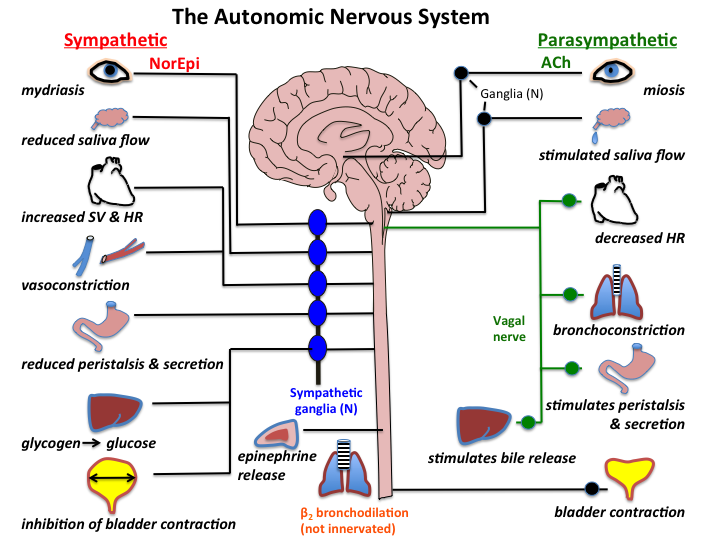
ANS Flow Chart
The primary role of the SNS is to mobilize the body's rapid involuntary response to dangerous or stressful situations, a mechanism often referred to as the "fight or flight" response. Anatomically, the SNS consists of a network of nerves that originate in the spinal cord and extend throughout the body, including to the major organs and glands. This extensive network allows the SNS to trigger a systemic response quickly. When the SNS is activated, it releases neurotransmitters like norepinephrine and epinephrine (adrenaline), which prepare the body to face an immediate threat.
The effects of SNS activation are widespread and significant. For instance, the heart rate increases to pump more blood to the muscles and brain, enhancing physical and mental alertness. The bronchi in the lungs dilate to increase oxygen intake. Blood flow is redirected from non-essential functions, like digestion, to muscles and organs critical for immediate action. Additionally, the liver releases glucose into the bloodstream for extra energy, and sweat is produced to cool the body.
From an evolutionary perspective, this response was crucial for survival, allowing early humans to confront or flee from predators and other threats. In the modern world, however, the triggers for the SNS have changed significantly. While we are less likely to face physical dangers, psychological and social stressors such as work pressure, financial worries, and interpersonal conflicts can chronically activate the SNS.
Chronic activation of the SNS can lead to various health issues. Continuous high levels of stress hormones can strain the cardiovascular system, leading to conditions like hypertension and an increased risk of heart disease. The suppression of non-essential functions, such as digestion, can lead to gastrointestinal problems. Moreover, prolonged stress can impact mental health, contributing to anxiety, depression, and sleep disturbances.
The Parasympathetic Nervous System: Promoting Relaxation and Recovery
The Parasympathetic Nervous System (PNS) is an integral component of the autonomic nervous system, working in tandem with the sympathetic nervous system (SNS) but serving an opposing function. Its primary role is to conserve energy and facilitate bodily functions that occur during states of rest and relaxation.
Anatomically, the PNS consists of nerves that originate in the brainstem and the lower part of the spinal cord. These nerves extend to various organs and glands, controlling functions that do not require immediate reaction. When the PNS is activated, it prompts a series of physiological responses that counteract the effects of the SNS. For example, it decreases heart rate and blood pressure, enhances digestion by stimulating gastrointestinal activity, and conserves energy by slowing the metabolic rate.
The PNS is also crucial for the body's recovery and healing processes. During periods of rest, it helps repair tissues, build up energy reserves, and support immune function. By stimulating activities such as salivation, lacrimation (tear production), urination, digestion, and sexual arousal, the PNS aids in maintaining the body's long-term health and well-being.
In the modern fast-paced world, the balance between the SNS and PNS is often disrupted. Chronic stress can lead to an overactive SNS, while the PNS may become under active. This imbalance can contribute to a host of health issues, including digestive disorders, weakened immune response, and increased susceptibility to chronic diseases. Therefore, restoring and maintaining the balance between these two systems is vital for overall health. The PNS's ability to induce relaxation and promote healing is an area of significant interest in various therapeutic approaches, including acupuncture. By understanding and influencing the PNS through acupuncture, acupuncture practitioners can help manage stress-related conditions and enhance the body’s natural healing processes.
In acupuncture, specific points are targeted to stimulate the PNS, thereby promoting relaxation, reducing stress, and alleviating symptoms associated with a hyperactive SNS. This understanding of the PNS's role in health and disease is crucial for practitioners who aim to provide holistic care that addresses not just the symptoms, but the underlying imbalances contributing to a patient’s condition.
Consequences of Prolonged Stress and Imbalance in the Autonomic Nervous System
Chronic stress, a prevalent issue in modern society, has significant and far-reaching impacts on the body, primarily through its effects on the autonomic nervous system (ANS). While the body's stress response is designed to handle short-term threats or challenges, prolonged exposure to stressors can lead to an imbalance between the sympathetic nervous system (SNS) and the parasympathetic nervous system (PNS), resulting in various health problems.
The continuous activation of the SNS during chronic stress keeps the body in a heightened state of alertness. This persistent state can have several detrimental effects:
Cardiovascular Health: The SNS increases heart rate and blood pressure to prepare the body for immediate action. Over time, this can strain the cardiovascular system, leading to hypertension (high blood pressure), increased risk of stroke, and other heart-related conditions.
Digestive Disorders: Chronic stress can disrupt the digestive system, as the body diverts resources away from digestion in response to stress. This can manifest as gastrointestinal issues like irritable bowel syndrome (IBS), ulcers, and acid reflux.
Immune System Suppression: The stress response can suppress the immune system, making the body more susceptible to infections and slowing down the healing process. Prolonged suppression can lead to adrenal insufficiency.
Mental Health: Persistent stress is a key factor in the development of mental health disorders such as anxiety, depression, and insomnia. The constant release of stress hormones like cortisol can affect brain function, mood, and sleep patterns.
Hormonal Imbalances: Stress hormones like cortisol and adrenaline are released in larger quantities during prolonged stress. Over time, this can lead to hormonal imbalances, impacting various bodily functions and contributing to conditions like obesity, diabetes, and menstrual irregularities.
Stimulating the Parasympathetic Nervous System through Acupuncture
During an acupuncture session, fine needles are inserted into specific points on the body. These points are strategically chosen based on the individual's symptoms and overall health condition. The stimulation of these points can activate the PNS, leading to a decrease in heart rate and blood pressure, relaxation of the muscles, and enhancement of digestive processes. One way acupuncture stimulates the PNS is by promoting the release of neurotransmitters like acetylcholine, which directly influences the activity of the PNS. Acetylcholine helps to slow the heart rate and increase digestive activity. Additionally, acupuncture has been shown to increase levels of endorphins, the body's natural painkillers, providing an analgesic response.
The calming effect of acupuncture on the PNS is not just beneficial for physical health; it also has significant implications for mental and emotional well-being. By promoting relaxation and reducing stress, acupuncture can help alleviate symptoms of anxiety, depression, and stress-related disorders. Patients often report a sense of deep relaxation and calmness during and after acupuncture sessions, highlighting its impact on the PNS.
Acupuncture's effect on the PNS is supported by various scientific studies and research. For instance, heart rate variability (HRV), a measure of the balance between the SNS and PNS, has been shown to improve with acupuncture treatment, indicating a shift towards parasympathetic dominance.